



Introduction
Waterfalls are among nature’s most captivating wonders, drawing travelers, hikers, and photographers from around the world. Their dramatic drops, roaring sounds, and misty surroundings create a sense of awe that few natural landscapes can match. However, beneath this beauty lies a powerful and potentially deadly force. A common question many people ask is: what happens if you fall into Follheur Waterfall? While the name itself may not be globally famous, the dangers associated with waterfalls like it are very real and scientifically understood.
Falling into a waterfall is not simply a matter of landing in water and swimming to safety. It is a complex, high-risk event involving extreme heights, rapid acceleration, violent water impact, and unpredictable underwater currents. Understanding these dangers is essential not only for awareness but also for prevention. This article explores in detail the physical, environmental, and survival-related aspects of such an incident, offering a clear and realistic explanation of what truly happens.
The Natural Structure and Power of Follheur Waterfall
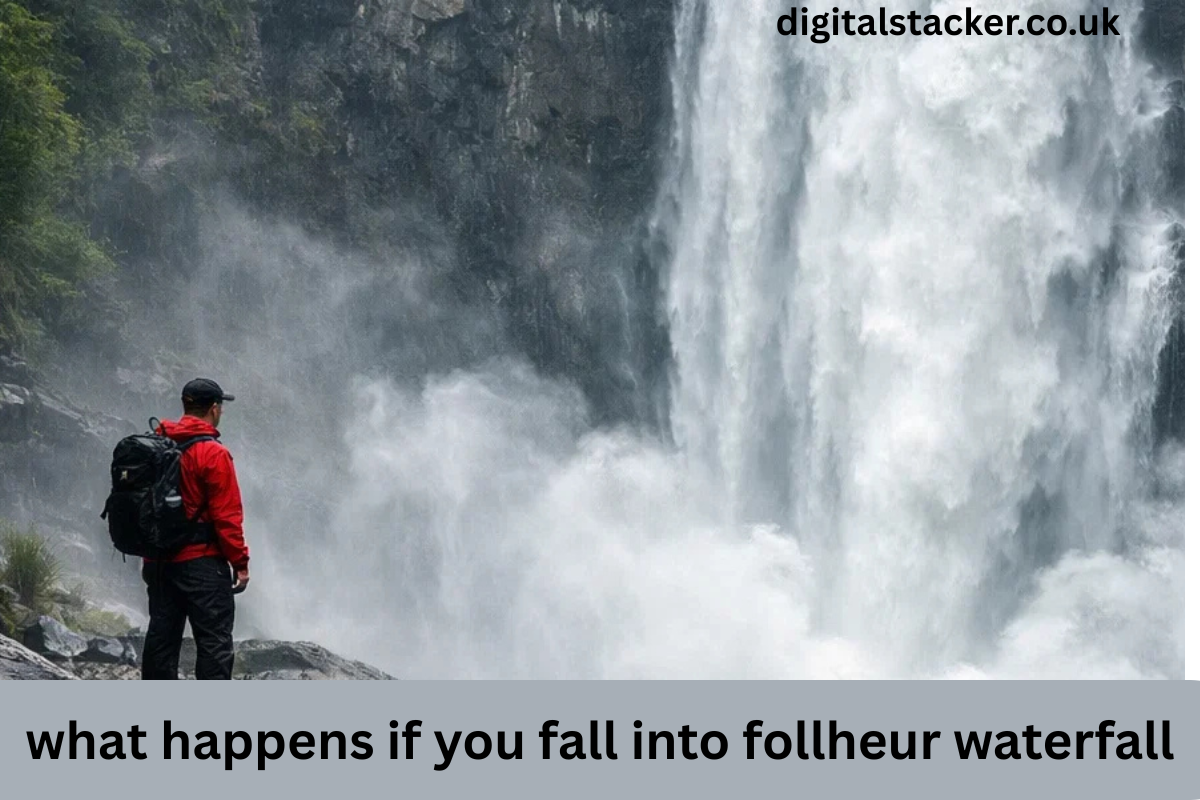
Follheur Waterfall represents the typical characteristics of a high-energy waterfall system. It is often described as having a steep vertical drop, surrounded by rocky cliffs and slippery terrain shaped by years of water erosion. The continuous flow of water over time creates uneven rock formations, hidden crevices, and jagged edges that make the entire area unstable and hazardous.
The force of the waterfall comes from gravity acting on large volumes of water. As water accelerates downward, it gains speed and energy, which is released upon impact at the base. This creates a plunge pool where water churns violently, producing strong currents and turbulence. The combination of height and water volume determines how powerful and dangerous the waterfall becomes, especially during rainy seasons when flow rates increase significantly.
Because of these natural factors, Follheur Waterfall is not just a scenic location but a dynamic and potentially dangerous environment. The terrain is constantly affected by moisture, making surfaces slippery and unpredictable. Visitors who underestimate these conditions often put themselves at serious risk.
How Accidents Typically Occur Near Waterfalls
Most accidents at waterfalls do not happen due to extreme recklessness alone. In many cases, they begin with simple, everyday actions. People may walk too close to the edge for a better view, attempt to take photos on wet rocks, or explore areas that appear stable but are actually fragile and slick.
The presence of moss and algae on rocks significantly reduces friction, making it easy to slip without warning. Even sturdy footwear cannot always prevent a fall in such conditions. A single misstep can lead to a loss of balance, and once momentum builds, it becomes extremely difficult to regain control, especially near a steep drop.
Environmental factors also contribute to accidents. Mist from the waterfall can obscure vision, while the loud sound of rushing water can make communication and awareness more difficult. These elements create a situation where even cautious individuals may misjudge distances or fail to recognize immediate danger.
The Physics of the Fall: Speed and Impact
Once a person slips over the edge of a waterfall like Follheur, gravity takes over completely. The body accelerates rapidly as it descends, reaching high speeds within seconds. The exact velocity depends on the height of the waterfall, but even moderate drops can result in significant force upon impact.
During the fall, the human body is rarely stable. Instead of falling in a controlled, upright position, individuals often tumble, rotate, or collide with rock surfaces along the way. These mid-air impacts can cause severe injuries before the person even reaches the water. Broken bones, head trauma, and internal damage are common outcomes in such scenarios.
The unpredictability of the fall makes it even more dangerous. Unlike controlled dives into water, a waterfall descent offers no opportunity to prepare or position the body properly. This lack of control greatly increases the risk of serious injury and reduces the chances of a safe landing.
Water Impact: Why It Can Be Extremely Dangerous
There is a widespread misconception that water always cushions a fall. In reality, when falling from a significant height, water behaves more like a solid surface due to its resistance and surface tension. The higher the fall, the harder the impact feels on the body.
At Follheur Waterfall, the impact with water can be intense enough to cause injuries such as spinal compression, fractured ribs, and joint dislocations. If the person enters the water in an awkward position, such as sideways or head-first, the risk of fatal injury increases dramatically. Even a feet-first entry, while relatively safer, does not eliminate the danger.
The force of impact can also knock the air out of the lungs, making it difficult to breathe immediately after entering the water. This moment of disorientation can be critical, especially in an environment where strong currents are present.
The Hidden Dangers of the Plunge Pool
Surviving the fall does not mean the danger is over. The plunge pool at the base of a waterfall is one of the most hazardous areas. It often contains submerged rocks, fallen branches, and uneven surfaces that are not visible from above.
These hidden obstacles can cause additional injuries upon impact or while attempting to swim. In some cases, the water depth may not be sufficient to absorb the fall completely, leading to collisions with the bottom. Even in deeper areas, debris can pose serious threats.
The water in the plunge pool is usually turbulent and filled with bubbles, reducing visibility and making it difficult to orient oneself. This disorientation can lead to panic, which further decreases the chances of making safe decisions in a critical moment.
Strong Currents and Hydraulic Forces
One of the most dangerous aspects of falling into a waterfall is the presence of powerful currents and hydraulic forces. When water crashes into the plunge pool, it creates a circular motion known as a hydraulic or recirculating current.
This current can trap a person underwater, pulling them down repeatedly and preventing them from reaching the surface. Even experienced swimmers can struggle against such forces, as the water continuously cycles in a powerful loop.
The strength of these currents depends on the volume and speed of the falling water. In high-flow conditions, escaping the hydraulic becomes extremely difficult without external assistance. This is one of the primary reasons why waterfall incidents often result in drowning rather than impact-related fatalities.
Cold Water Shock and Physical Reactions
Another critical factor is the temperature of the water. Waterfalls are often fed by rivers, springs, or melting snow, which means the water can be very cold regardless of the surrounding climate. Sudden immersion in cold water can trigger a condition known as cold shock.
Cold shock causes an immediate and involuntary gasp reflex, rapid breathing, and a spike in heart rate. This reaction can lead to inhalation of water within seconds, especially if the person is submerged upon entry. The sudden change in temperature can also impair muscle function, making it harder to swim or stay afloat.
In addition to cold shock, prolonged exposure to cold water can lead to hypothermia. As the body loses heat, physical and mental functions deteriorate, reducing the ability to respond effectively to the situation. This further increases the risk of drowning.
Injuries and the Risk of Drowning
The combination of impact, underwater hazards, and strong currents makes injuries almost inevitable in a waterfall fall. Common injuries include concussions, fractures, deep cuts, and spinal damage. These injuries can limit mobility and make it difficult to swim or escape from dangerous conditions.
Drowning is the most common cause of death in waterfall accidents. This often occurs when a person is unable to reach the surface due to hydraulic currents, injuries, or exhaustion. Even if the individual manages to surface, the constant movement of water can make it difficult to breathe or maintain stability.
The presence of panic also plays a significant role. In such high-stress situations, individuals may struggle to think clearly or conserve energy, leading to quicker exhaustion. Without immediate rescue or a clear escape route, survival becomes increasingly unlikely.
Rescue Difficulties and Survival Chances
Rescuing someone from a waterfall environment is extremely challenging. The same conditions that make the waterfall dangerous for victims also pose risks for rescuers. Slippery rocks, strong currents, and limited access points can delay rescue efforts.
In many cases, specialized equipment and trained personnel are required to carry out a safe rescue. This may include ropes, harnesses, and even aerial support in remote locations. However, response times can vary depending on the location and accessibility of the site.
Survival chances depend on several factors, including the height of the fall, the severity of injuries, water conditions, and how quickly help arrives. Individuals who avoid severe impact injuries and manage to escape the hydraulic currents have a higher chance of survival, but such outcomes are relatively rare.
Prevention and Safety Awareness
Understanding the dangers of Follheur Waterfall highlights the importance of prevention. Most accidents can be avoided by maintaining a safe distance from the edge and respecting warning signs and barriers. Awareness of environmental conditions is also crucial, as wet surfaces and increased water flow can significantly raise the level of risk.
Visitors should prioritize safety over thrill or photography. Staying on designated paths, wearing appropriate footwear, and avoiding risky behavior near cliffs can greatly reduce the likelihood of an accident. It is also important to remain aware of surroundings and avoid distractions in hazardous areas.
Education and awareness are key to preventing such incidents. By understanding how waterfalls function and the risks they pose, individuals can make informed decisions and enjoy these natural wonders safely.
Read more:thejavasea.me Leaks AIO-TLP370: Risks & Insights Guide
Conclusion
Falling into Follheur Waterfall is a life-threatening event that involves far more than just a drop into water. From the initial slip and rapid descent to the powerful impact, underwater hazards, and relentless currents, each stage presents significant dangers. The combination of physical injuries, cold shock, and hydraulic forces makes survival extremely challenging.
While waterfalls continue to attract visitors with their beauty, they must be approached with caution and respect. The risks are real, and even a small mistake can have serious consequences. By understanding what happens in such scenarios and taking proper precautions, people can protect themselves and others from harm.
Ultimately, the key is awareness. Waterfalls are powerful natural systems, and appreciating them safely requires knowledge, responsibility, and a commitment to staying out of harm’s way.
