



Introduction
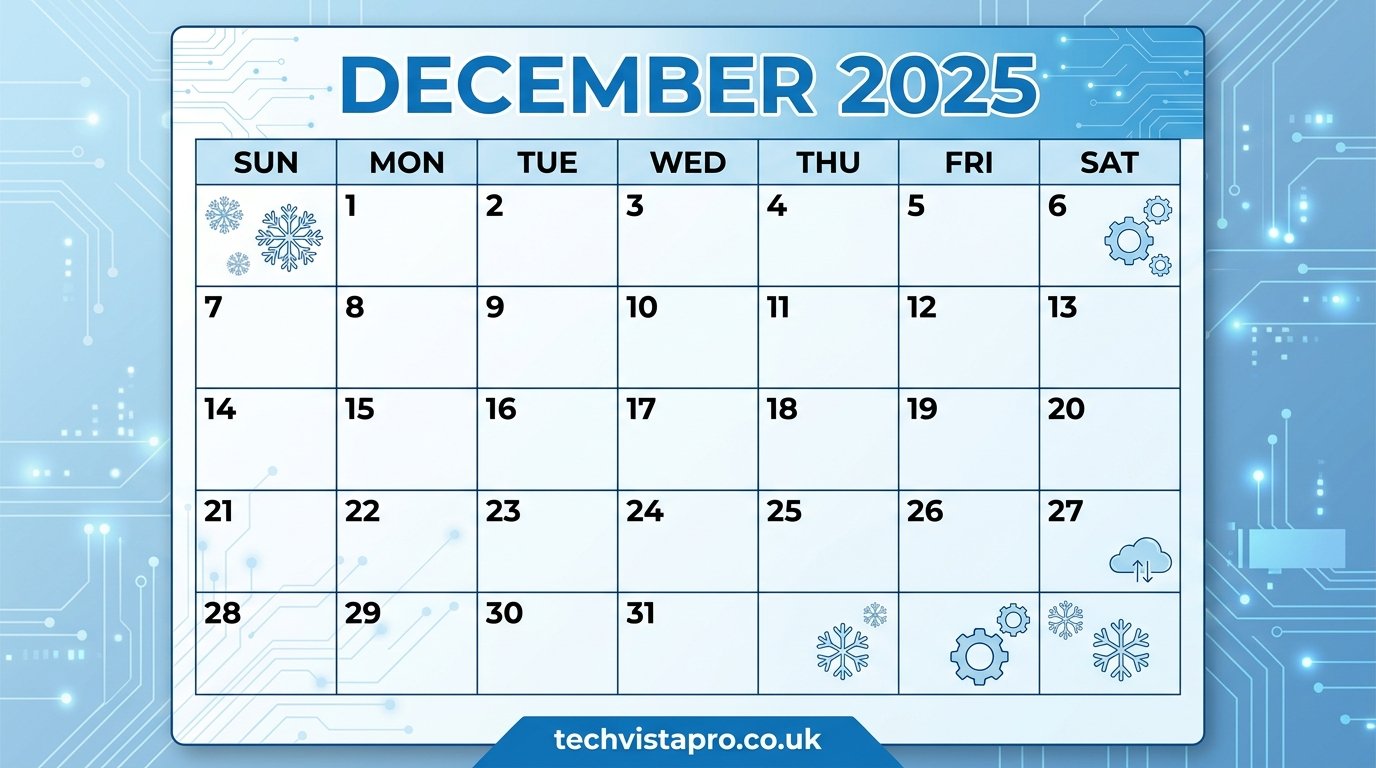
The December 2025 calendar represents the final chapter of the year 2025, a month widely associated with global holidays, seasonal transitions, and year-end planning activities. It is a 31-day month that plays an essential role in personal scheduling, business closing cycles, academic breaks, and cultural celebrations across different regions. December is also known for being one of the most event-rich months of the Gregorian calendar, making it a key period for planning both professional and personal commitments.
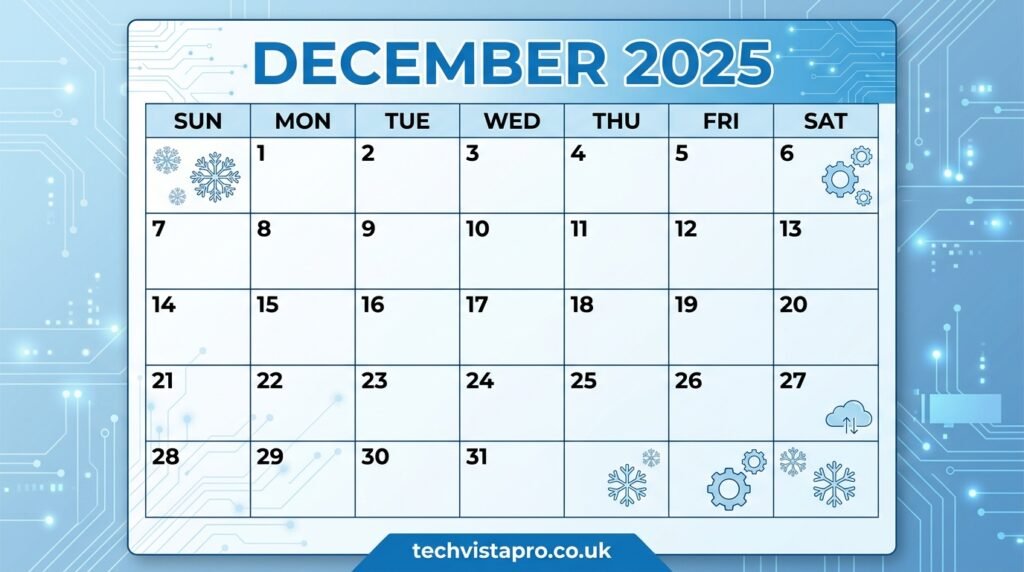
According to the official Gregorian calendar structure, December 2025 begins on Monday, December 1, and ends on Wednesday, December 31, 2025. This alignment creates a full month that spans five weeks in most calendar layouts, making it especially useful for printable planners and digital scheduling tools. The month includes globally recognized holidays such as Christmas and New Year’s Eve, along with several regional observances that vary from country to country.
Structure and Layout of December 2025 Calendar
The December 2025 calendar follows the standard Gregorian format, consisting of 31 days distributed across seven-day weeks. Since the month starts on a Monday, it creates a clean alignment for weekly planning systems, especially in professional environments where Monday-to-Sunday scheduling is commonly used.
In printed and digital formats, December 2025 is often displayed in a grid system that clearly separates weekdays and weekends. This layout makes it easier for users to track appointments, deadlines, and holiday breaks. Many calendar versions also include week numbers, which are particularly useful in corporate and academic settings for tracking annual progress and reporting cycles.
Because December marks the final month of the year, it is frequently used for annual summaries, performance evaluations, and preparation for upcoming schedules in January. This structural positioning gives the December 2025 calendar added importance beyond just daily planning.
Global Holidays and International Observances
December 2025 is filled with globally recognized holidays and international observances that reflect cultural, religious, and historical significance. One of the most widely celebrated holidays is Christmas Day on December 25, observed in many countries around the world as a public holiday. In several regions, Christmas Eve on December 24 is also treated as part of the holiday season, often associated with family gatherings and festive traditions.
Other global observances include World AIDS Day on December 1 and various international awareness events throughout the month. These observances highlight themes such as health awareness, human rights, and global unity. December also includes New Year’s Eve on December 31, which is celebrated internationally as a transition into the new year with festivities, fireworks, and cultural events.
In many parts of the world, these holidays influence business operations, school schedules, and public services, making December one of the most socially active months of the year.
Regional Holidays and Country-Specific Calendar Events
While global holidays remain consistent across many countries, the December 2025 calendar also reflects significant regional variations. Different nations observe unique holidays based on cultural, religious, and national traditions, making the month highly diverse in its scheduling.
For example, in Pakistan, December 25 is observed both as Christmas Day and Quaid-e-Azam Day, honoring the founder of the nation alongside Christian celebrations. This dual observance makes the date particularly important in the national calendar. In other countries, December 1 and December 2 may include national independence or republic celebrations, while additional regional holidays occur throughout the month depending on local traditions.
These variations demonstrate how the December 2025 calendar is not uniform globally but instead adapts to cultural and national identities. This diversity is one of the reasons December is considered a highly significant month in international planning systems.
Seasonal Transition and Climate Significance
December plays a major role in seasonal transitions across the globe. In the Northern Hemisphere, it represents the full arrival of winter, bringing shorter daylight hours, colder temperatures, and often snowfall in many regions. These environmental changes directly influence how people use the December 2025 calendar for travel planning, holiday arrangements, and indoor activities.
In contrast, the Southern Hemisphere experiences summer during December, creating a completely different seasonal experience. Countries in this region often use the month for outdoor festivals, beach tourism, and summer holidays. This dual seasonal nature makes December unique among all months in the calendar year.
The contrast between winter and summer experiences during the same month highlights the global diversity of December activities and further increases its importance in international scheduling.
Work, School Schedules, and Year-End Planning
The December 2025 calendar is particularly important for workplaces and academic institutions because it marks the end of the annual cycle. Many organizations use this month to finalize financial reports, complete project deadlines, and prepare budgets for the upcoming year.
In educational systems, December is commonly associated with winter vacations and semester breaks in many countries. Students often receive extended holidays during this period, allowing families to travel and participate in seasonal celebrations. News reports frequently highlight December as a month eagerly awaited by students due to its combination of holidays and reduced academic workload.
This combination of professional closure and academic breaks makes December a transitional month where productivity shifts toward reflection, planning, and preparation for the new year.
Cultural and Religious Importance of December
December holds deep cultural and religious importance across many societies. It is widely regarded as a month of reflection, gratitude, and spiritual observance. Christmas, the most widely recognized celebration in the month, carries religious significance for Christians and is also celebrated culturally by many non-religious communities around the world.
In addition to Christmas, various religious observances such as fasting days, special prayers, and festivals occur in different cultures during December. These events often emphasize themes of forgiveness, renewal, and spiritual growth. In some traditions, December is seen as a time to close the year with reflection and prepare mentally and spiritually for the new beginning in January.
This cultural depth adds emotional and symbolic value to the December 2025 calendar beyond its practical use for scheduling.
Moon Phases and Natural Calendar Cycles
The December 2025 calendar also includes important astronomical events such as moon phases, which are commonly featured in detailed printable and digital calendars. These phases include the full moon, last quarter, new moon, and first quarter, each occurring at different intervals throughout the month.
Moon phases are not only scientifically significant but also culturally important in many societies. They influence agricultural planning, fishing activities, religious calendars, and traditional festivals. For example, lunar cycles are often used to determine auspicious dates for ceremonies and seasonal activities.
By including lunar data, the December 2025 calendar provides users with a more complete understanding of natural time cycles alongside the standard Gregorian system.
December 2025 as a Financial and Business Closing Month
From a business perspective, December 2025 is one of the most critical months of the year. Companies use this period to finalize financial statements, evaluate annual performance, and prepare strategic plans for the following year. The final weeks of December are often dedicated to reporting, auditing, and closing accounts.
Retail businesses also experience significant activity during December due to holiday shopping seasons, especially around Christmas and New Year. This leads to increased economic activity in many regions, making December an important month for both global and local markets.
Because of these financial and operational responsibilities, the December 2025 calendar is widely used in corporate planning systems, helping organizations manage deadlines and seasonal workload efficiently.
Conclusion
The December 2025 calendar is more than just a monthly layout of dates; it is a structured framework that supports global planning, cultural celebrations, financial closing, and seasonal transitions. As the final month of the year, it carries unique importance in both personal and professional contexts.
