



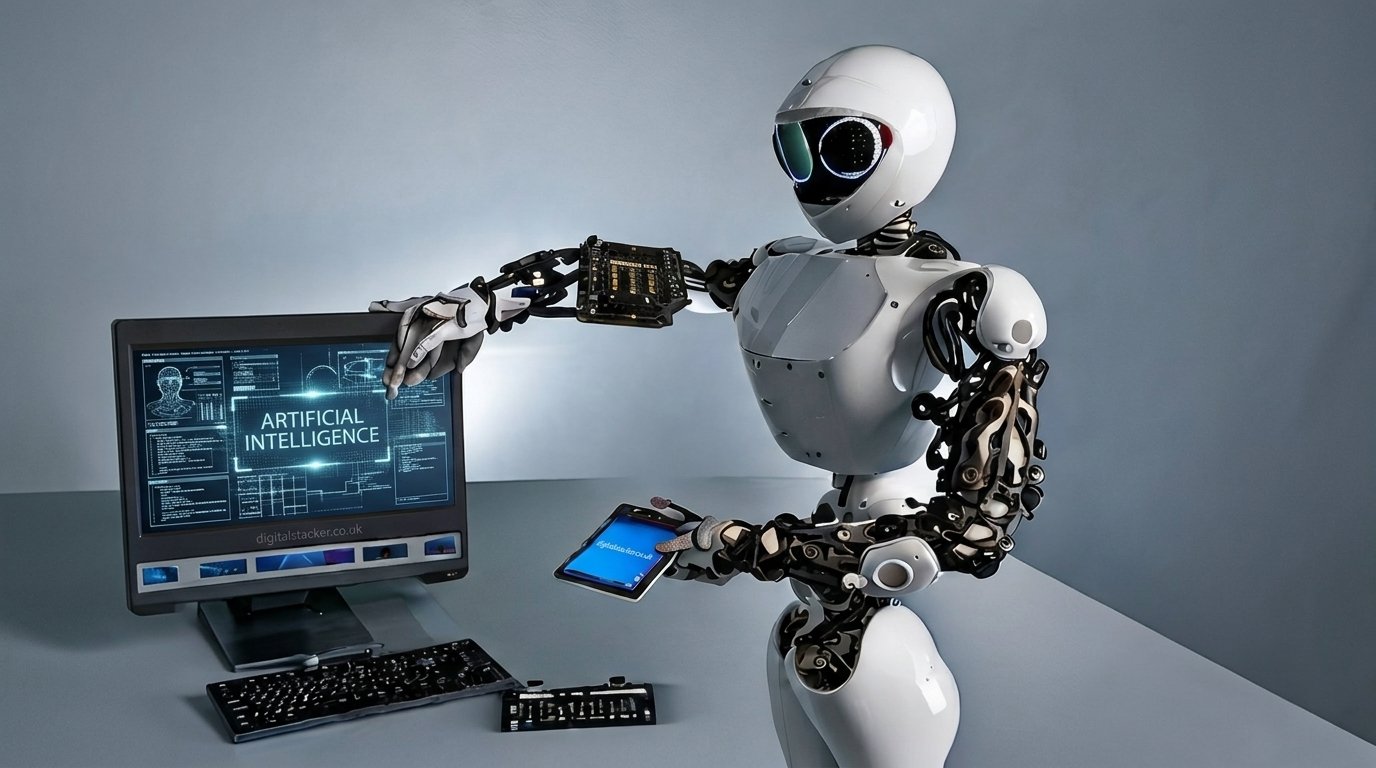
Artificial Intelligence (AI) has become one of the most influential technologies of the modern era. Once considered a concept limited to science fiction, AI is now a part of everyday life. From voice assistants and recommendation systems to smart healthcare solutions and automated customer support, artificial intelligence is changing the way people live, work, and communicate. Businesses, governments, and individuals are increasingly adopting AI-powered tools to improve efficiency, reduce costs, and deliver better experiences.
As AI technology continues to evolve, it is creating new opportunities across industries while also raising important questions about privacy, ethics, and employment. Understanding how artificial intelligence works and how it affects daily life helps people make informed decisions about using this rapidly growing technology.
What Is Artificial Intelligence?
Artificial Intelligence refers to computer systems that can perform tasks typically requiring human intelligence. These tasks include learning from data, recognizing speech, understanding language, solving problems, making decisions, and identifying patterns. AI systems use technologies such as machine learning, deep learning, and natural language processing to improve their performance over time.
Unlike traditional software that follows fixed instructions, AI systems can analyze large amounts of information and adapt based on new data. This ability makes AI valuable in industries where speed, accuracy, and automation are essential. As computing power increases, AI applications continue to become more sophisticated and accessible.
AI in Everyday Life
Many people use artificial intelligence every day without even realizing it. Virtual assistants can answer questions, set reminders, and control smart home devices using voice commands. Streaming platforms recommend movies and music based on viewing habits, while online shopping websites suggest products according to browsing history and previous purchases.
AI also improves navigation by providing real-time traffic updates and suggesting the fastest routes. Email services automatically filter spam messages, and smartphones use AI-powered cameras to enhance photo quality. These practical applications save time and create more personalized digital experiences.
The Impact of AI on Business
Businesses across various sectors are using AI to improve productivity and customer satisfaction. AI-powered chatbots provide instant customer support around the clock, reducing waiting times and handling common questions efficiently. Marketing teams analyze customer behavior using AI to create personalized advertising campaigns that generate better results.
Manufacturing companies rely on AI for quality control, predictive maintenance, and process automation. Financial institutions use artificial intelligence to detect fraudulent transactions, assess risks, and improve investment strategies. These innovations help organizations reduce operational costs while increasing accuracy and efficiency.
Artificial Intelligence in Healthcare
Healthcare is one of the industries experiencing significant transformation through artificial intelligence. AI assists doctors in analyzing medical images, identifying diseases at earlier stages, and supporting more accurate diagnoses. Hospitals use predictive analytics to improve patient care and optimize resource management.
Artificial intelligence also accelerates medical research by analyzing complex datasets and helping researchers identify potential treatments more quickly. Wearable health devices monitor heart rate, sleep patterns, and physical activity, allowing individuals to track their health while providing healthcare professionals with valuable information.
Education and Personalized Learning
Artificial intelligence is reshaping education by making learning more personalized and accessible. AI-powered learning platforms adapt educational content according to each student’s strengths, weaknesses, and learning pace. This personalized approach helps students understand concepts more effectively and remain engaged throughout the learning process.
Teachers also benefit from AI by automating administrative tasks such as grading assignments and tracking student progress. Online education platforms use intelligent recommendation systems to suggest relevant courses and learning materials, making education more flexible for learners of all ages.
Challenges and Ethical Considerations
Despite its many advantages, artificial intelligence presents several challenges that society must address responsibly. Privacy remains a major concern because AI systems often rely on large amounts of personal data. Organizations must protect sensitive information and ensure compliance with data protection regulations.
Another important issue involves bias in AI algorithms. If training data contains unfair or incomplete information, AI systems may produce inaccurate or discriminatory outcomes. Developers, researchers, and policymakers must work together to build transparent, fair, and accountable AI systems that benefit everyone.
The Future of Artificial Intelligence
The future of artificial intelligence appears promising as research and innovation continue to accelerate. AI is expected to play a larger role in autonomous transportation, smart cities, climate research, cybersecurity, and scientific discovery. Businesses will continue investing in AI-powered solutions to remain competitive in an increasingly digital economy.
Rather than replacing humans entirely, AI is likely to enhance human capabilities by automating repetitive tasks and allowing people to focus on creativity, problem-solving, and strategic decision-making. As technology advances, developing digital skills and understanding AI concepts will become increasingly valuable for individuals entering the modern workforce.
Conclusion
Artificial intelligence has already transformed many aspects of modern life, and its influence continues to grow across industries and communities worldwide. From healthcare and education to business and everyday convenience, AI improves efficiency, supports innovation, and creates new opportunities for economic growth. Responsible development, ethical practices, and continuous learning will play a crucial role in ensuring AI benefits society as a whole.
As artificial intelligence becomes more deeply integrated into daily life, individuals and organizations should embrace its potential while remaining aware of its challenges. By combining technological innovation with human judgment, society can build a future where AI enhances productivity, improves quality of life, and supports sustainable progress for generations to come.
