



Introduction
The corn snake is one of the most popular pet snakes in the world, admired for its beautiful colors, calm temperament, manageable size, and relatively simple care requirements. Scientifically known as Pantherophis guttatus, the corn snake belongs to the colubrid family and is native to the southeastern United States. Over the years, it has become a favorite among reptile enthusiasts, beginner snake keepers, and experienced herpetologists alike due to its adaptability and gentle nature. Corn snakes are often recommended as one of the best starter reptiles because they are generally easy to handle and rarely display aggressive behavior.
Beyond their popularity as pets, corn snakes play an important ecological role in the wild. They help control rodent populations and contribute to balanced ecosystems across their native range. Their striking appearance, combined with a fascinating natural history, has made them one of the most studied and widely bred snake species in captivity. Whether someone is considering a corn snake as a pet or simply wants to learn more about this remarkable reptile, understanding its biology, behavior, habitat, and care requirements provides valuable insight into one of North America’s most beloved snakes.
Understanding the Corn Snake Species
The corn snake is a non-venomous constrictor that captures and subdues prey by wrapping its body around the animal and applying pressure until the prey can no longer breathe. Unlike venomous snakes, corn snakes pose little danger to humans and are widely considered harmless. Their scientific name, Pantherophis guttatus, reflects their classification among North American rat snakes. They are sometimes referred to as red rat snakes because of their coloration and feeding habits.
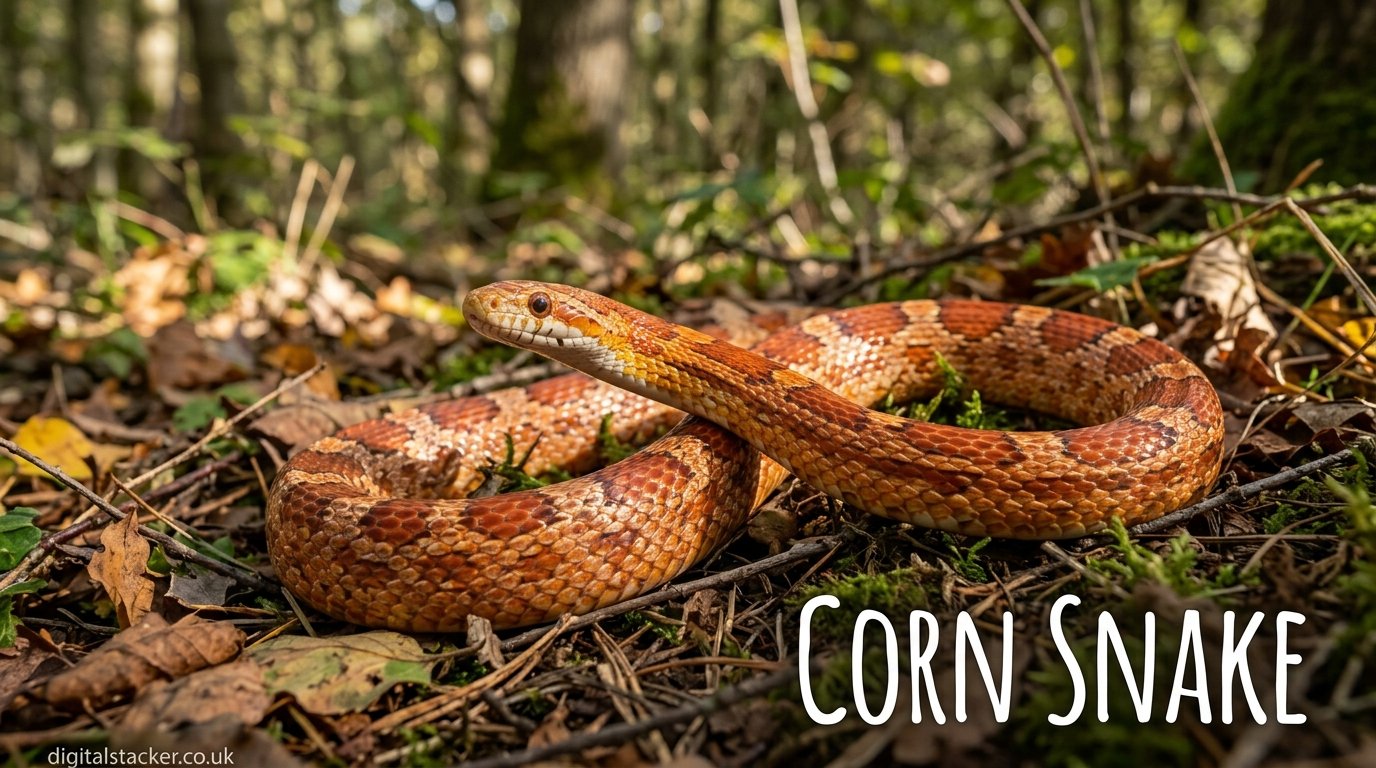
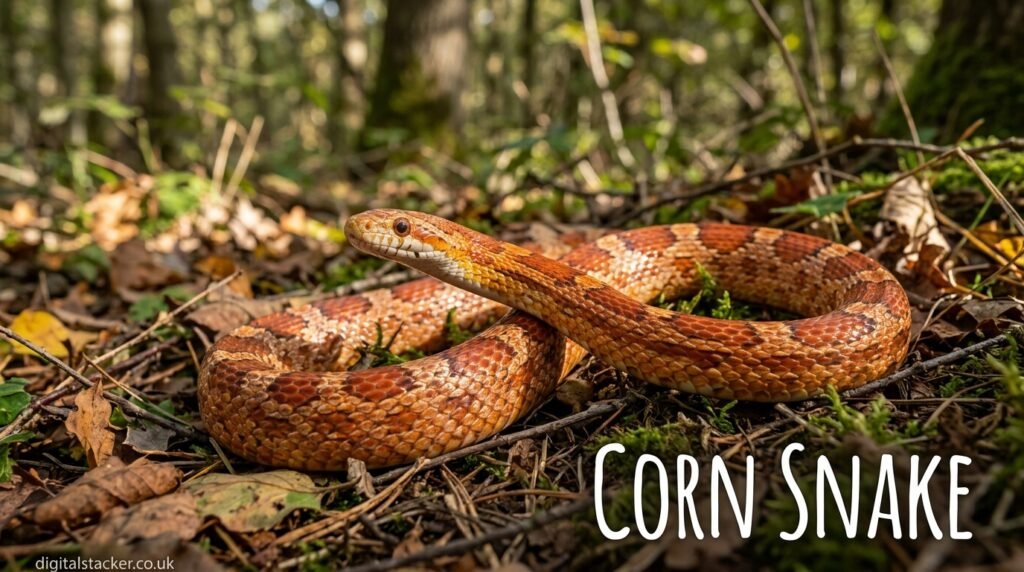
Adult corn snakes typically reach lengths of three to five feet, although some individuals may grow slightly larger under optimal conditions. Their bodies are slender and athletic, allowing them to move efficiently through grasslands, forests, abandoned buildings, and agricultural areas. Corn snakes are known for their distinctive pattern of reddish-orange blotches outlined in black against a lighter background. This pattern provides effective camouflage in natural environments and contributes to their visual appeal in captivity.
The origin of the common name “corn snake” is often linked to their frequent presence around grain storage areas and corn fields, where rodents are abundant. By hunting mice and rats attracted to stored grain, corn snakes became closely associated with agricultural environments. This relationship helped establish them as beneficial animals that naturally assist in pest control.
Natural Habitat and Geographic Distribution
Corn snakes are native primarily to the southeastern and eastern regions of the United States. Their natural range includes states such as Florida, Georgia, South Carolina, North Carolina, Alabama, Mississippi, and parts of neighboring regions. Within these areas, they inhabit a wide variety of ecosystems, demonstrating remarkable adaptability.
In the wild, corn snakes can be found in pine forests, hardwood woodlands, grasslands, rocky outcrops, abandoned farms, and even suburban neighborhoods. They are highly adaptable and frequently thrive near human settlements where rodent populations provide a consistent food source. Their ability to occupy diverse habitats has contributed significantly to their success as a species.
These snakes are excellent climbers despite spending much of their time on the ground. They often use trees, shrubs, and elevated structures to search for prey or avoid predators. Their semi-arboreal nature allows them to exploit a wide range of food sources, including rodents, birds, and bird eggs. This versatility makes them highly effective predators within their native ecosystems.
Physical Characteristics and Color Variations
One of the most attractive features of the corn snake is its extraordinary range of colors and patterns. Wild corn snakes typically display orange, red, brown, and black coloration arranged in saddle-like markings running down their backs. Their bellies often feature a distinctive black-and-white checkerboard pattern that helps distinguish them from similar species.
Selective breeding in captivity has produced hundreds of unique color morphs. These morphs include albino, snow, ghost, lavender, caramel, blood red, and many other visually striking combinations. Each morph possesses unique genetic traits that influence coloration, pattern, or both. As a result, corn snake breeding has become a specialized area within the reptile hobby, attracting enthusiasts interested in genetics and reptile husbandry.
Despite their varied appearances, all corn snakes share similar physical characteristics. They have smooth scales, slender bodies, and a streamlined shape that enables efficient movement. Their appearance can sometimes cause confusion with venomous copperheads, leading to unnecessary fear. However, corn snakes are harmless and provide valuable ecological benefits through rodent control.
Behavior and Temperament
Corn snakes are widely regarded as one of the most docile snake species available in captivity. Their calm demeanor makes them suitable for beginner reptile keepers as well as experienced hobbyists. Most captive-bred corn snakes tolerate handling well when approached gently and consistently. Their generally predictable behavior contributes to their popularity among pet owners.
These snakes are primarily crepuscular, meaning they are most active during dawn and dusk. In some situations, they may also display nocturnal behavior, particularly during warmer months. During the day, corn snakes often remain hidden beneath logs, rocks, leaf litter, or other sheltered locations where they feel secure.
When threatened, corn snakes may vibrate their tails, flatten their bodies slightly, or attempt to flee. Biting is relatively uncommon and usually occurs only when a snake feels cornered or frightened. Their preference for avoidance rather than confrontation further reinforces their reputation as gentle reptiles.
Diet and Feeding Habits
Corn snakes are carnivorous predators that feed primarily on small mammals, especially rodents. In the wild, their diet commonly includes mice, rats, voles, birds, bird eggs, and occasionally small reptiles. Their hunting skills make them valuable natural pest controllers in agricultural and residential environments.
Corn snakes locate prey using a combination of scent detection and environmental awareness. Like other snakes, they use their forked tongues to collect chemical particles from the air and transfer them to the Jacobson’s organ located in the roof of the mouth. This remarkable sensory system allows them to track prey with impressive accuracy.
In captivity, most corn snakes thrive on frozen-thawed rodents that are appropriately sized for their body dimensions. Hatchlings typically consume small pinkie mice, while adults eat larger mice and occasionally small rats. Feeding schedules vary according to age, size, and metabolism, but adults generally eat every one to two weeks under proper husbandry conditions.
Corn Snake Care and Housing Requirements
Providing a suitable enclosure is one of the most important aspects of corn snake care. A secure terrarium with adequate floor space allows the snake to move, explore, and thermoregulate effectively. Because corn snakes are known escape artists, secure lids and properly sealed enclosures are essential for preventing accidental escapes.
Temperature management plays a critical role in maintaining health. A proper thermal gradient should include a warm side and a cooler side, allowing the snake to regulate its body temperature naturally. Most care recommendations suggest warm-side temperatures in the low to mid-80s Fahrenheit and cooler areas around the low 70s. A basking area may reach approximately 88–90 degrees Fahrenheit.
Humidity should generally remain moderate, typically between 40 and 60 percent, with slightly higher humidity available during shedding periods. Appropriate substrate, secure hiding places, climbing branches, and fresh water contribute to a healthy environment that supports both physical and behavioral well-being.
Health, Lifespan, and Common Medical Concerns
Corn snakes are generally hardy reptiles when maintained under proper conditions. In captivity, many individuals live between fifteen and twenty-five years, with some exceeding that range when provided with exceptional care. Their longevity means prospective owners should view ownership as a long-term commitment rather than a short-term hobby.
Common health issues include respiratory infections, shedding difficulties, parasites, and skin infections. Most of these problems are directly linked to improper husbandry, including incorrect temperature, poor humidity management, unsanitary enclosures, or inadequate nutrition. Early detection and prompt veterinary care significantly improve outcomes.
Regular observation is essential for maintaining health. Signs of potential illness may include wheezing, lethargy, refusal to eat, retained shed skin, swelling, or unusual behavior. Routine cleaning, fresh water, and stable environmental conditions help prevent many common health complications.
Breeding and Reproduction
Corn snakes are oviparous reptiles, meaning they reproduce by laying eggs. In the wild, breeding typically occurs during spring after a period of reduced winter activity. Males actively search for females, and successful mating results in egg production several weeks later.
Female corn snakes usually lay clutches containing anywhere from ten to thirty eggs, depending on age, size, and overall health. Eggs are deposited in warm, humid locations that support successful incubation. Under appropriate conditions, hatchlings emerge after several weeks and are fully independent from birth.
Captive breeding has become highly popular because of the incredible variety of color morphs available. Responsible breeding programs focus not only on appearance but also on maintaining strong genetics, health, and temperament. These efforts have helped make corn snakes one of the most widely available pet reptiles worldwide.
Why Corn Snakes Are Among the Best Pet Reptiles
Corn snakes consistently rank among the most recommended reptiles for beginners. Their manageable size, generally calm disposition, and straightforward husbandry requirements make them accessible to individuals with little or no previous reptile experience. Unlike many larger snake species, they can be comfortably housed without requiring extremely large enclosures.
Another reason for their popularity is the incredible diversity of available morphs. Enthusiasts can choose from hundreds of color and pattern combinations, allowing them to find a snake that matches their personal preferences. This variety has created a thriving community of breeders, hobbyists, and educators who share information about care and genetics.
Additionally, corn snakes provide an excellent opportunity for people to learn about reptile biology, animal behavior, and responsible pet ownership. Their relatively predictable care needs allow owners to focus on building confidence and experience while maintaining a healthy, thriving reptile companion.
Conclusion
The corn snake is one of the most remarkable reptile species available today. Native to the southeastern United States, this non-venomous snake combines beauty, adaptability, intelligence, and a gentle temperament in a way that few reptiles can match. Its ecological importance in controlling rodent populations, coupled with its popularity in captivity, has made it one of the most recognizable snake species in North America.
Whether admired in the wild or cared for as a pet, the corn snake continues to captivate people around the world. With proper husbandry, responsible ownership, and a commitment to understanding its needs, this fascinating reptile can thrive for decades. Its combination of manageable care requirements, striking appearance, and calm personality ensures that the corn snake will remain a favorite among reptile enthusiasts for generations to come.
