



Introduction
The global energy landscape is undergoing a massive transformation as countries shift toward clean and sustainable power sources. Among the leaders driving this transition, Tesla, Inc. has emerged as a key innovator, not only in electric vehicles but also in advanced energy storage systems. One of its most strategic and impactful initiatives is the Tesla China battery project focused on renewable energy, which highlights the growing importance of large-scale battery storage in modern power systems.
China, as the world’s largest energy consumer and a global leader in renewable energy deployment, provides the perfect environment for such a project. Tesla’s expansion into China’s energy storage market reflects both the rising demand for grid stability and the urgent need to integrate renewable sources like solar and wind into national energy systems. This article explores the project in depth, covering its technology, economic implications, environmental impact, and future potential.
Tesla’s Expansion into China’s Renewable Energy Sector
Tesla’s decision to expand its energy storage business into China is closely tied to its long-term mission of accelerating the transition to sustainable energy. While the company gained global recognition through its electric vehicles, its energy division has steadily grown into a powerful segment focused on solar power and battery storage solutions.
The move into China represents a strategic alignment with the country’s ambitious climate goals. China has committed to achieving carbon neutrality by 2060, and large-scale battery storage is essential for reaching that target. Tesla recognized this opportunity and invested heavily in building infrastructure that supports renewable energy integration.
By entering China’s renewable energy sector, Tesla not only strengthens its global presence but also contributes to the development of a more resilient and efficient energy system. The project demonstrates how international collaboration and advanced technology can address some of the world’s most pressing environmental challenges.
The Shanghai Megafactory and Its Strategic Importance
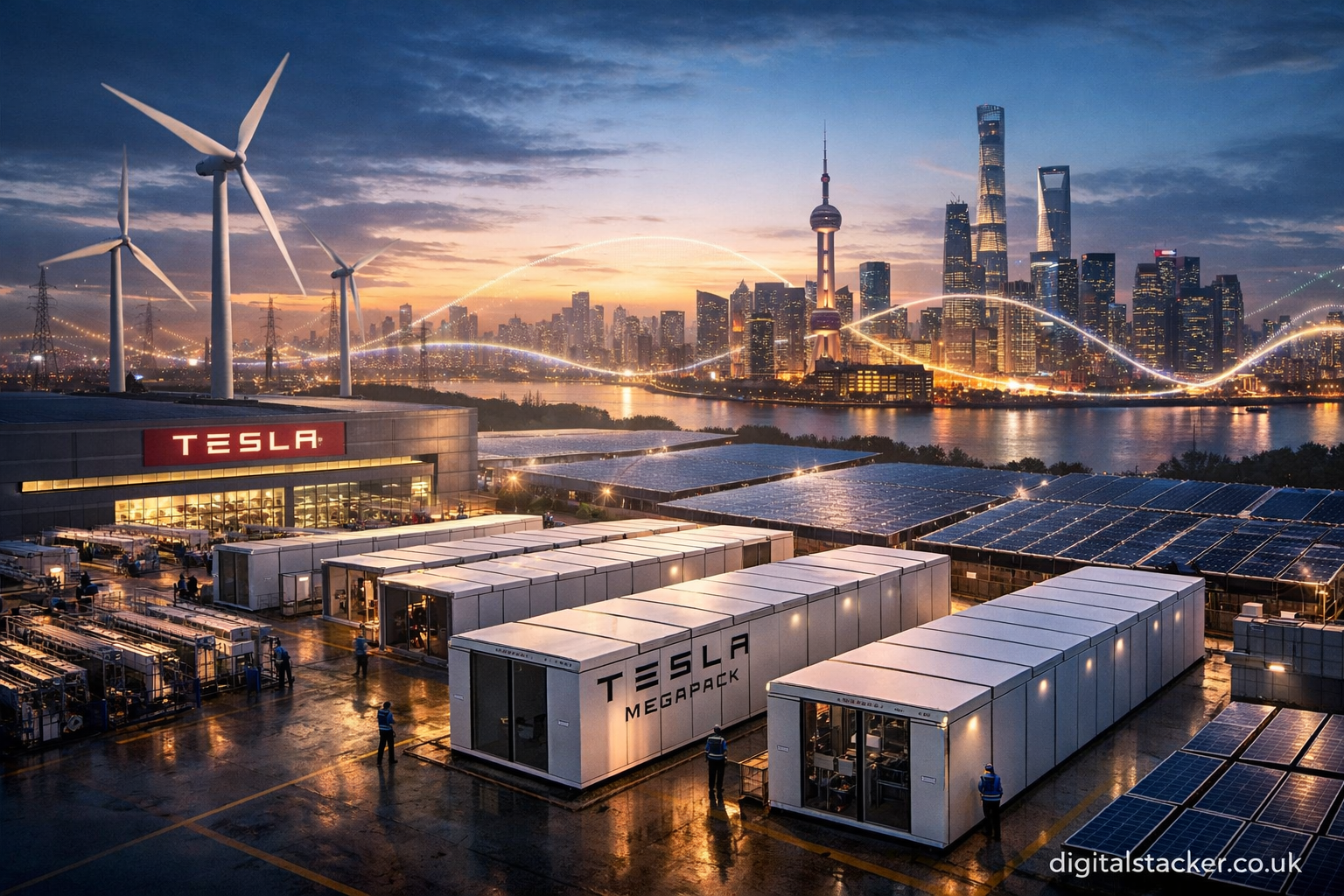
At the center of Tesla’s battery project in China is its state-of-the-art Megafactory located in Shanghai. This facility is dedicated to producing utility-scale battery systems designed to support renewable energy infrastructure. Its construction marked a significant milestone, as it became Tesla’s first energy storage manufacturing plant outside the United States.
The Shanghai Megafactory is designed for high-volume production, with the capacity to manufacture thousands of battery units annually. This scale allows Tesla to meet both domestic and international demand for energy storage solutions. The factory also benefits from China’s advanced manufacturing ecosystem, which enables faster production and cost efficiency.
In addition to its production capabilities, the Megafactory plays a crucial role in Tesla’s global supply chain. Batteries produced in Shanghai are exported to various countries, helping to stabilize power grids and support renewable energy projects worldwide. This makes the facility a cornerstone of Tesla’s global energy strategy.
Understanding Megapack Technology and Its Role
A key component of the Tesla China battery project is its Megapack technology, which is specifically designed for large-scale energy storage. Unlike residential battery systems, Megapacks are built to handle massive amounts of electricity, making them ideal for utility companies and grid operators.
Each Megapack unit can store several megawatt-hours of energy, allowing it to supply electricity to thousands of homes during peak demand periods. This capability is essential for balancing supply and demand, especially in regions with high renewable energy penetration. The modular design of the system allows multiple units to be combined into large storage installations.
Another important aspect of Megapack technology is its integration with advanced software systems. These systems monitor energy usage, optimize storage efficiency, and ensure that electricity is distributed effectively. This combination of hardware and software makes Tesla’s solution highly efficient and reliable.
The Role of Battery Storage in Renewable Energy Systems
Renewable energy sources such as solar and wind are inherently variable, which creates challenges for maintaining a stable power supply. Solar panels only generate electricity during daylight hours, while wind turbines depend on weather conditions. This variability can lead to energy shortages or surpluses if not properly managed.
Battery storage systems provide a solution by storing excess energy generated during peak production times and releasing it when demand increases. This ensures a consistent and reliable supply of electricity, even when renewable sources are not actively producing power.
In China, where renewable energy capacity is expanding rapidly, battery storage plays a critical role in reducing reliance on fossil fuels. By enabling a smoother integration of clean energy into the grid, Tesla’s battery project helps create a more sustainable and efficient energy system.
Tesla’s Grid-Scale Energy Storage Projects in China
Beyond manufacturing batteries, Tesla is actively involved in deploying them within China’s energy infrastructure. One of its most notable initiatives is a large-scale grid storage project in Shanghai, which represents a major investment in the country’s energy future.
This project involves integrating Megapack systems into the local power grid, allowing for better management of electricity supply and demand. By storing excess renewable energy, the system ensures that clean power is available during periods of high consumption. This reduces the need for backup power from fossil fuel sources.
The project also demonstrates the potential of advanced battery technology to enhance grid stability. By preventing power outages and improving efficiency, Tesla’s energy storage solutions contribute to a more reliable and resilient electricity network.
Economic Benefits of the Tesla China Battery Project
The Tesla China battery project has significant economic implications, both locally and globally. In China, it has created new job opportunities in manufacturing, engineering, and technology sectors. The construction and operation of the Megafactory have also attracted investment and boosted economic activity in the region.
On a broader scale, the project supports the growth of the global energy storage market. As demand for renewable energy continues to rise, the need for efficient storage solutions will increase, creating new business opportunities and driving innovation.
The project also contributes to cost reductions in energy storage technology. As production scales up and efficiency improves, the cost of batteries is expected to decrease, making renewable energy more accessible and affordable for consumers and businesses alike.
Environmental Impact and Sustainability Goals
One of the most important aspects of the Tesla China battery project is its environmental impact. By enabling greater use of renewable energy, the project helps reduce greenhouse gas emissions and combat climate change. This aligns with global efforts to transition away from fossil fuels and toward cleaner energy sources.
Battery storage systems also help minimize energy waste by capturing excess electricity that would otherwise be lost. This improves overall energy efficiency and reduces the environmental footprint of power generation.
Tesla’s commitment to sustainability extends beyond its products to its manufacturing processes. The company aims to minimize waste, reduce emissions, and use sustainable materials wherever possible. This holistic approach reinforces its role as a leader in clean energy innovation.
Challenges and Competitive Landscape in China
Despite its many advantages, the Tesla China battery project faces several challenges. One of the main obstacles is the highly competitive nature of China’s battery market, which includes established players with strong domestic support and extensive experience.
Additionally, integrating large-scale battery systems into existing power grids requires significant infrastructure upgrades and coordination with local authorities. This can be a complex and time-consuming process.
Geopolitical factors also play a role, as tensions between major global powers can impact trade and business operations. However, Tesla’s ability to navigate these challenges will be crucial in determining the long-term success of its energy storage initiatives in China.
Future Outlook of Tesla’s Renewable Energy Strategy
The future of Tesla’s renewable energy efforts in China looks promising, driven by increasing demand for clean energy and strong government support. As technology continues to advance, battery storage systems are expected to become more efficient, affordable, and widely adopted.
Tesla’s Shanghai Megafactory is likely to play a central role in this growth, serving as a hub for innovation and production. The company’s continued investment in research and development will further enhance its capabilities and strengthen its competitive position.
The success of the Tesla China battery project could also inspire similar initiatives in other countries, accelerating the global transition to renewable energy. By demonstrating the effectiveness of large-scale energy storage, Tesla is helping to shape the future of energy systems worldwide.
Read more:digitalstacker.co.uk
Conclusion
The Tesla China battery project renewable energy initiative represents a significant step forward in the global effort to create a sustainable energy future. Through its advanced Megapack technology, large-scale manufacturing capabilities, and strategic investments, Tesla is addressing one of the most critical challenges in renewable energy: storage.
From supporting grid stability to reducing carbon emissions, the project highlights the transformative potential of battery storage systems. While challenges remain, the benefits of this initiative are far-reaching, impacting both the environment and the global economy.
As the world continues to embrace renewable energy, projects like Tesla’s in China will play a vital role in building a cleaner, more reliable, and sustainable energy landscape for future generations.
