



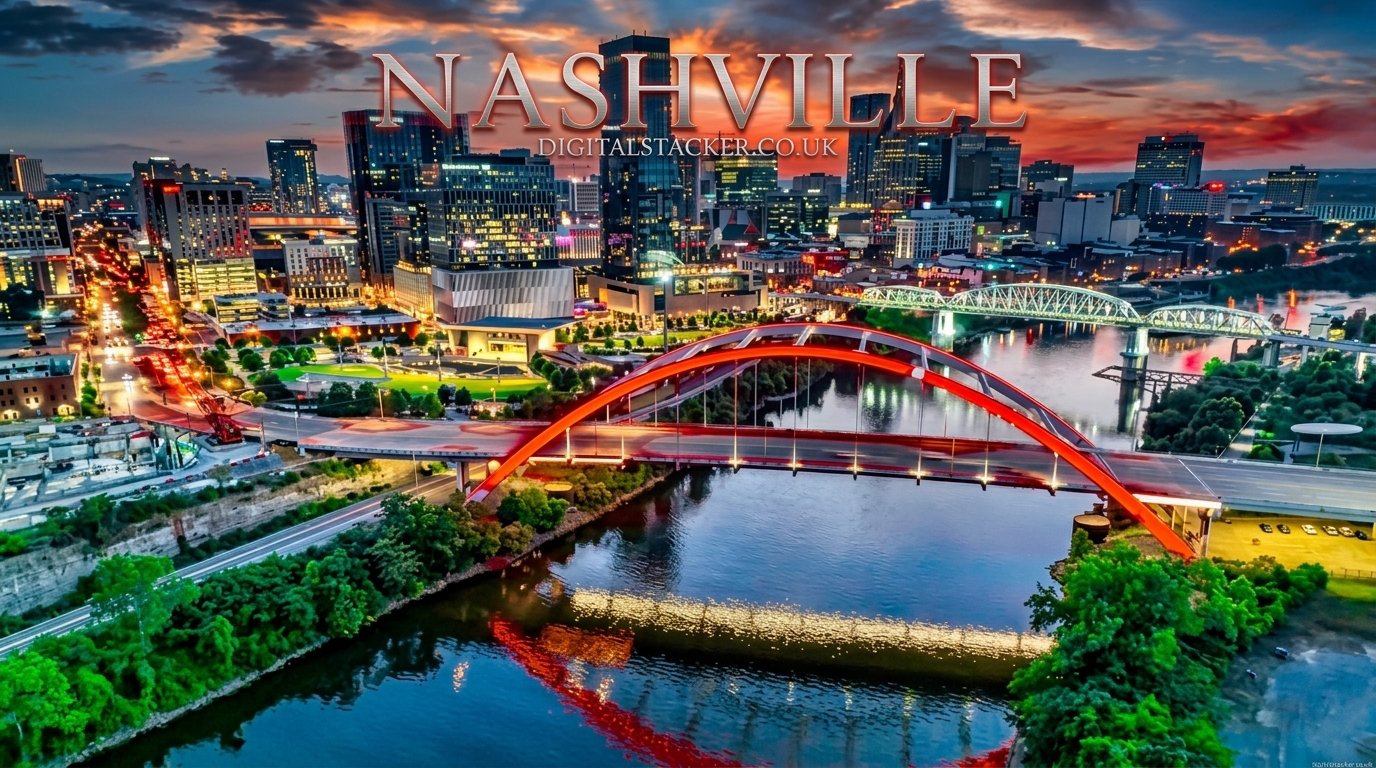
Welcome to Nashville: America’s Music City
Nashville, Tennessee has earned its nickname “Music City” the hard way, through more than a century of songwriting, recording, and live performance that shaped American popular music. Sitting along the Cumberland River in Middle Tennessee, the city blends small-town Southern charm with the energy of a fast-growing metropolitan hub. Visitors arrive expecting honky-tonks and cowboy boots, and they find that, but they also discover a city with serious food, thriving business districts, and neighborhoods that feel distinct from one another.
What makes Nashville stand out today is its momentum. The metro area is one of the fastest-growing regions in the country, drawing new residents, corporate headquarters, and millions of tourists every year. Whether someone is planning a bachelorette weekend on Broadway, a family trip to the Grand Ole Opry, or a permanent move for work, understanding what Nashville actually offers helps set realistic expectations. This guide walks through the city’s history, culture, economy, and practical travel details so you can plan with confidence.
A Brief History of Nashville’s Rise to Fame
Nashville was founded in 1779 as a frontier settlement called Fort Nashborough, named after Revolutionary War hero Francis Nash. It grew steadily as a river port and later became Tennessee’s state capital, but its identity as a music hub didn’t take shape until the 20th century. The launch of the WSM radio barn dance in 1925, which later became the Grand Ole Opry, planted the seed for what would become the country music industry’s spiritual home.
By the 1950s and 1960s, record labels, publishing houses, and recording studios clustered along a stretch of road now known as Music Row. This concentration of talent and infrastructure gave Nashville a gravitational pull that other cities couldn’t match, and it remains the reason so many songwriters and performers still relocate here to build a career. Historic sites like the Ryman Auditorium, often called the Mother Church of Country Music, still host performances that connect visitors directly to this legacy.
Today, that history coexists with rapid modern development. Downtown Nashville has added thousands of new residential units over the past several years, and the skyline continues to change with new hotels, office towers, and mixed-use districts rising near the historic core.
Music City’s Legendary Music Scene
Nashville’s music scene goes far beyond country music, even though that genre built its reputation. Broadway, the honky-tonk strip downtown, is packed with live bands playing everything from classic country to rock and blues, often for free, which is why it remains one of the most visited stretches of the city. The energy here is loud, casual, and welcoming to visitors who just want to wander between venues.
Beyond Broadway, serious music fans should visit the Country Music Hall of Fame and Museum, the Johnny Cash Museum, and the Musicians Hall of Fame to understand the deeper history behind the songs. The National Museum of African American Music, located downtown, tells an important and often overlooked part of the story, tracing genres from gospel and blues to hip-hop and R&B that trace their roots back to Black musical traditions.
For a more intimate experience, the Bluebird Cafe hosts songwriter rounds where the people who actually wrote hit songs perform them acoustically. This kind of access to working musicians, not just polished stage shows, is part of what separates Nashville from other music-themed destinations.
Top Attractions and Things to Do in Nashville
Beyond music venues, Nashville offers a surprising range of attractions for different types of travelers. The Parthenon in Centennial Park is a full-scale replica of the original Athens structure, built originally for Tennessee’s 1897 centennial celebration and now housing an art museum inside. Families often combine a visit there with a walk through the park’s lake and gardens.
History buffs can tour Andrew Jackson’s Hermitage, the plantation estate of the seventh U.S. president, located just outside the city center. Closer to downtown, the Tennessee State Capitol and the Frist Art Museum, housed in a striking Art Deco former post office building, give visitors a break from the music-focused itinerary.
Sports and outdoor recreation have also become bigger draws. Nissan Stadium hosts Tennessee Titans football and major concerts, while GEODIS Park is home to Nashville SC and has become a hub for soccer-related events, including festivities tied to international tournaments. For a slower pace, Shelby Bottoms Greenway and Radnor Lake State Park offer hiking trails just minutes from downtown traffic.
Nashville’s Food and Culinary Culture
Nashville’s food scene has grown into a genuine culinary destination, not just a stopover for tourists. Hot chicken is the dish most associated with the city, a fiery fried chicken tradition that originated locally and has since spread nationwide, with spots like Prince’s Hot Chicken and Hattie B’s drawing long lines from locals and visitors alike.
Southern comfort food remains a strong presence too, with meat-and-three restaurants serving classic plate lunches of fried chicken, greens, and cornbread. But the city’s culinary identity has expanded well beyond tradition, with a growing number of chef-driven restaurants, craft breweries, and international cuisine options opening in neighborhoods like Germantown, East Nashville, and The Gulch.
Food and beverage spending has become a meaningful part of the local tourism economy, with visitors spending billions of dollars annually on dining and recreation combined. That growth has encouraged more restaurant investment, which in turn keeps the food scene evolving rather than staying frozen around its old reputation.
Nashville’s Growing Economy and Job Market
Nashville’s economy has diversified well beyond music and tourism, even though those industries remain culturally central. <cite index=”2-1″>Major industries in the city include health care management, automobile production, finance, higher education, insurance, music production, printing and publishing, and technology manufacturing.</cite> Large employers headquartered in the region include <cite index=”2-1″>Bridgestone Americas, Cracker Barrel, Dollar General, and HCA Healthcare</cite>, giving the local job market a stability that goes beyond seasonal tourism work.
The tech sector in particular has expanded quickly, drawn by lower operating costs compared to coastal cities and a growing talent pipeline from local universities. <cite index=”2-1″>The Nashville metro area reported a median household income of $84,685 in 2023, alongside an unemployment rate of 3.7 percent as of mid-2025</cite>, figures that reflect a relatively healthy labor market compared to many other mid-sized American metros.
Tourism itself remains a massive economic engine. <cite index=”10-1″>Davidson County alone brought in $11.2 billion in visitor spending in a recent year, an amount that translates to roughly $30.7 million spent every day in the city.</cite> That spending supports tens of thousands of hospitality jobs and helps keep local tax burdens lower than they would otherwise be for residents.
Best Time to Visit Nashville
Choosing the right season can make a real difference in how a Nashville trip feels. Spring, roughly April through early June, brings mild temperatures and blooming parks, making it comfortable for walking downtown or exploring outdoor attractions without the summer heat or humidity that builds up later in the year.
Fall, from September through early November, offers a similar advantage, with cooler evenings that make patio dining and outdoor concerts more enjoyable. Both seasons also tend to avoid the most extreme crowd surges, though Nashville rarely has a truly quiet period anymore given how steadily tourism has grown.
Summer remains popular despite the heat, especially with major events, festivals, and concerts drawing large crowds downtown. Winter is quieter overall, but New Year’s Eve is a major exception, with the city’s downtown celebration drawing well over 200,000 visitors for one of the largest live music and fireworks events in the region.
Where to Stay in Nashville
Downtown and The Gulch offer the most walkable options for visitors who want easy access to Broadway, the Music City Center convention complex, and the main tourist attractions. Hotel inventory here has expanded significantly in recent years, with new luxury properties continuing to open to meet rising demand.
For travelers attending conventions or large events, the Gaylord Opryland Resort deserves special mention. It is one of the largest non-gaming hotel properties in the country, built around indoor gardens and waterways, and it functions almost like a self-contained destination with its own restaurants, shops, and event spaces.
Travelers looking for a quieter base often choose East Nashville or Germantown, both within a short drive or rideshare of downtown but with a more residential, neighborhood feel. These areas tend to offer better value and a more local dining experience compared to the tourist-heavy core.
Living in Nashville: Cost of Living and Neighborhoods
For people considering a move rather than a visit, Nashville’s neighborhoods vary widely in character and cost. East Nashville has become known for its artistic, slightly bohemian atmosphere, while Green Hills and Belle Meade offer more established, upscale residential settings. Younger professionals often gravitate toward The Gulch or Midtown for proximity to work and nightlife.
Housing costs have risen alongside the population boom, and new residents should research neighborhood-specific pricing carefully rather than assuming the whole metro area is affordable. That said, Nashville still tends to compare favorably to coastal tech and finance hubs, which is part of why companies and workers have continued relocating here.
Public transportation remains a work in progress compared to older, denser American cities, so many residents rely on cars. Traffic has become a common complaint as the population has grown, and anyone planning a move should factor commute times into their choice of neighborhood.
Final Thoughts on Visiting or Moving to Nashville
Nashville’s identity as Music City is well earned, but reducing the city to just its music scene misses much of what makes it work as a place to visit or live. The economy has diversified, the food scene has matured, and the neighborhoods each offer a different flavor of Southern city life, from historic charm to modern development.
Anyone planning a trip should build in time for both the obvious highlights, like Broadway and the Country Music Hall of Fame, and quieter experiences like Radnor Lake or a neighborhood meat-and-three restaurant. That mix tends to give visitors a fuller sense of the city rather than just its postcard image.
For those considering relocation, doing neighborhood-level research on cost of living and commute patterns will matter more than general city-wide statistics. Nashville’s growth shows no signs of slowing, which means both the opportunities and the challenges of living here are likely to keep evolving in the years ahead.
