



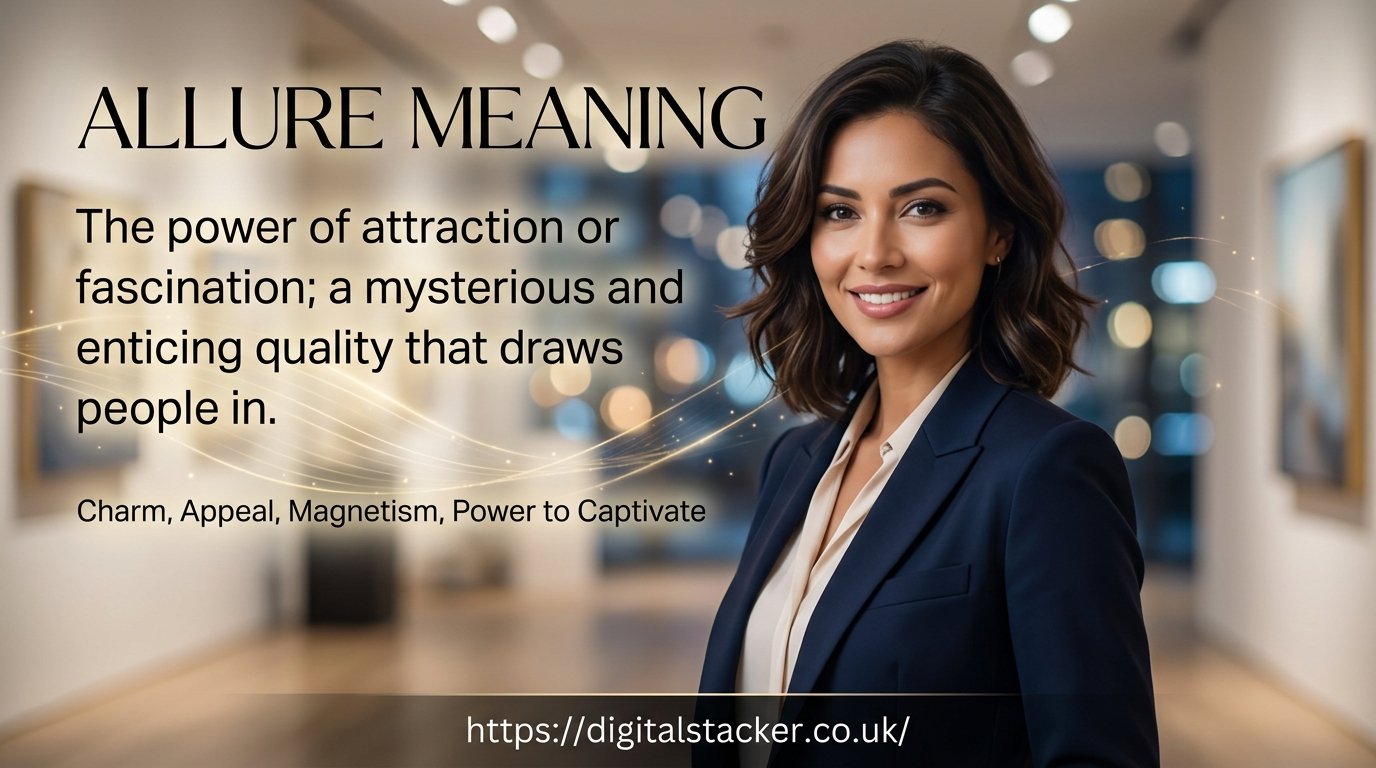
The word “allure” is one of the most expressive and emotionally rich words in the English language. It is commonly used to describe a powerful sense of attraction, fascination, charm, or mystery that captures a person’s attention and imagination. People often associate allure with beauty, elegance, confidence, luxury, romance, and charisma, but the meaning extends much deeper than simple physical attractiveness. The concept of allure meaning combines emotional, psychological, and cultural elements that influence how humans respond to people, places, ideas, and experiences. Allure Meaning
In modern language, allure can describe many different forms of attraction. Someone may talk about the allure of luxury fashion, the allure of a mysterious personality, the allure of travel destinations, or the allure of fame and success. The word carries emotional intensity because it suggests attraction that feels magnetic and difficult to resist. Unlike ordinary attraction, allure usually involves emotional depth, curiosity, sophistication, and an almost intangible quality that creates fascination.
The growing popularity of terms related to confidence, charisma, emotional intelligence, beauty standards, luxury lifestyles, and personal branding has also increased interest in understanding the deeper meaning of allure. In psychology, marketing, fashion, literature, and modern culture, allure remains a central concept because humans are naturally drawn toward things that stimulate curiosity, emotion, and desire. Understanding allure therefore helps explain many aspects of social interaction, human behavior, and emotional perception. Allure Meaning
The Dictionary Definition and Historical Origin of Allure Meaning
The word “allure” is generally defined as the quality of being powerfully and mysteriously attractive or fascinating. It can function as both a noun and a verb in English grammar. As a noun, allure refers to the irresistible charm or attraction associated with a person, object, or experience. As a verb, it means to tempt, entice, or attract someone strongly through emotional or sensory appeal. Allure Meaning
Historically, the term originates from the Old French word “aleurer,” which referred to attracting or enticing someone. Over time, the meaning evolved into a broader emotional concept connected with fascination and charm. Language historians explain that the development of the word reflects humanity’s long-standing interest in attraction, persuasion, beauty, and emotional influence within social life and storytelling traditions. Allure Meaning
The historical use of allure can be found throughout literature, poetry, philosophy, and art. Writers from different eras used the term to describe romantic fascination, seductive beauty, emotional temptation, and the mysterious appeal of individuals who could captivate others effortlessly. Today, the word continues to maintain that emotional richness while adapting to modern contexts such as branding, social media culture, fashion trends, and personal identity.
Psychological Meaning of Allure and Human Attraction
From a psychological perspective, allure is deeply connected to how the human brain processes attraction, curiosity, and emotional interest. Psychologists often explain attraction as a combination of physical perception, emotional response, social influence, confidence, mystery, and familiarity. Allure becomes powerful because it combines several of these psychological factors into one emotionally compelling experience.
One important psychological aspect of allure is mystery. Human beings are naturally curious about things they do not fully understand. When a person or experience appears emotionally intriguing or slightly unpredictable, the brain becomes more engaged and attentive. This is why mysterious personalities are often considered alluring. The lack of complete understanding creates emotional tension and fascination, encouraging deeper attention and emotional investment. Allure Meaning
Confidence is another major psychological factor connected with allure. Studies in social psychology consistently show that people are often attracted to individuals who appear emotionally secure, calm, and comfortable with themselves. Genuine confidence creates emotional stability, which many people subconsciously interpret as attractive and trustworthy. However, true allure usually comes from balanced confidence combined with authenticity rather than arrogance or excessive self-promotion.
Allure in Beauty, Fashion, and Personal Style
The beauty and fashion industries rely heavily on the concept of allure because emotional attraction plays a major role in consumer behavior. Fashion campaigns, luxury advertisements, skincare brands, and fragrance companies often focus on creating emotional fantasy rather than simply promoting practical products. The goal is to associate beauty and style with elegance, confidence, sophistication, and emotional appeal. Allure Meaning
Personal style also contributes significantly to perceived allure. Clothing, grooming, posture, facial expression, voice tone, and body language all influence how someone is perceived socially. However, many experts in fashion psychology argue that authentic self-expression creates stronger allure than blindly following trends. Individuals who appear comfortable and natural in their personal style often seem more emotionally attractive and memorable.
Fragrance marketing especially demonstrates how allure functions emotionally. Perfumes are rarely advertised using technical descriptions alone. Instead, brands emphasize romance, mystery, sensuality, adventure, and confidence. This reflects the broader cultural belief that allure is closely tied to emotional atmosphere and sensory experience rather than appearance alone. A person’s energy, emotional warmth, and confidence often shape their allure more deeply than physical beauty itself.
The Role of Mystery and Charisma in Allure
Mystery has always been one of the defining elements of allure in literature, psychology, and popular culture. People who reveal themselves gradually often appear more emotionally compelling because curiosity naturally encourages deeper emotional engagement. The unknown creates fascination, and fascination strengthens emotional attraction. Allure Meaning
Charisma also plays an essential role in creating allure. Charismatic individuals often possess strong communication skills, emotional intelligence, authenticity, and social confidence. They make others feel emotionally engaged and valued during interactions. This emotional effect contributes significantly to their magnetic presence. Charisma is not necessarily linked to traditional beauty standards, which explains why some individuals become deeply attractive through personality and emotional energy alone.
The relationship between mystery and charisma creates a powerful emotional combination. Someone who appears emotionally intelligent and confident while maintaining an element of unpredictability often leaves a lasting impression. This explains why alluring personalities are frequently described as unforgettable, captivating, or magnetic even when people struggle to explain exactly why they feel attracted to them.
Allure in Literature, Cinema, and Popular Culture
The concept of allure has played a major role throughout literature, cinema, music, and visual art for centuries. Many iconic fictional characters are remembered because of their mysterious charm, emotional complexity, or magnetic personalities. Writers often use alluring characters to explore themes such as temptation, ambition, romance, danger, and emotional transformation. Allure Meaning
In cinema, directors frequently use lighting, costume design, camera movement, dialogue, and music to create an aura of allure around characters. This cinematic technique helps audiences emotionally connect with certain individuals even before fully understanding their personalities. Some of the most memorable characters in film history became iconic specifically because they projected emotional intrigue and charismatic mystery. Allure Meaning
Modern celebrity culture also revolves heavily around allure. Celebrities, influencers, and public figures carefully manage their public image to maintain fascination and emotional connection with audiences. Social media platforms have amplified this process by allowing individuals to curate visual aesthetics, storytelling styles, and emotional narratives that increase their personal brand appeal.
The Connection Between Allure and Luxury Marketing
Luxury marketing depends strongly on the emotional psychology of allure. Premium brands rarely focus only on product functionality. Instead, they sell emotional experiences connected with exclusivity, elegance, sophistication, and status. Consumers are often drawn to luxury items because of the emotional identity associated with them rather than the product itself. Allure Meaning
The allure of luxury is rooted in aspiration and emotional storytelling. Fashion houses, jewelry brands, luxury hotels, and high-end automotive companies create carefully designed visual narratives that make consumers associate their products with confidence, success, romance, beauty, and prestige. This emotional association increases perceived value and strengthens customer loyalty.
Digital marketing and influencer culture have expanded the role of allure even further. Social media platforms now allow brands and individuals to create highly curated lifestyles designed to appear desirable and emotionally fascinating. Visual storytelling, aesthetics, and emotional branding have become central strategies for building modern influence and consumer engagement.
Emotional and Social Influence of Allure in Relationships
Allure also has a significant impact on human relationships and social interaction. Emotional attraction often develops through qualities such as humor, empathy, confidence, emotional intelligence, creativity, and authenticity. While physical appearance may create initial attention, long-term fascination usually depends on emotional connection and interpersonal energy. Allure Meaning
In romantic relationships, allure often grows through emotional depth and communication style. Individuals who make others feel emotionally understood, inspired, excited, or curious are frequently perceived as more attractive. Emotional unpredictability combined with kindness and confidence can strengthen romantic chemistry and create deeper emotional bonds.
Social allure also affects friendships, leadership, and public influence. Leaders who communicate vision, empathy, emotional calmness, and authenticity often inspire strong loyalty and Allure Meaningadmiration. This demonstrates that allure is not limited to romance or beauty but extends into broader social psychology and human connection.
Everyday Uses of the Word Allure in Modern Language
The word “allure” appears frequently in everyday communication because it can describe many different forms of emotional attraction. People often refer to the allure of city life, the allure of travel destinations, the allure of fame, the allure of financial success, or the allure of artistic creativity. In each case, the word suggests emotional fascination rather than simple preference.
Travel writing frequently uses the term to describe destinations that feel magical, culturally rich, luxurious, or emotionally captivating. Similarly, lifestyle magazines use the word when discussing beauty trends, fashion aesthetics, romantic experiences, or elegant living. The term carries sophistication because it implies emotional depth rather than surface-level attraction. Allure Meaning
The flexibility of the word makes it especially powerful in communication. Unlike simpler words such as “attractive” or “interesting,” allure suggests a blend of mystery, elegance, curiosity, and emotional magnetism. This layered meaning explains why the word remains popular Allure Meaning in modern language across many industries and cultural discussions.
Why the Idea of Allure Remains Timeless
The idea of allure remains timeless because human beings have always been emotionally drawn toward beauty, mystery, confidence, and fascination. Across different cultures and historical periods, societies consistently admired individuals and experiences that created emotional curiosity and deep psychological impact. Whether expressed through art, storytelling, fashion, relationships, or leadership, allure continues shaping human interaction and emotional perception.
Modern technology and social media may have changed how allure is presented publicly, but the psychological foundations remain the same. People still seek emotional connection, admiration, inspiration, beauty, and meaningful experiences. This explains why allure remains central to industries such as entertainment, branding, fashion, luxury marketing, and personal development. Allure Meaning
Ultimately, allure is far more than simple attractiveness. It represents a combination of emotional intelligence, mystery, confidence, elegance, charisma, and psychological fascination that creates memorable emotional impressions. Understanding the meaning of allure helps explain why certain people, ideas, experiences, and lifestyles continue captivating human imagination across generations.
Conclusion
The of allure meaning goes far beyond ordinary attraction or physical beauty. It represents emotional fascination, psychological intrigue, charisma, confidence, elegance, Allure Meaning and mystery combined into one powerful human experience. Throughout history, allure has influenced literature, art, fashion, relationships, marketing, entertainment, and cultural identity because humans are naturally drawn toward things that feel emotionally captivating and meaningful.
